
What exactly was measured
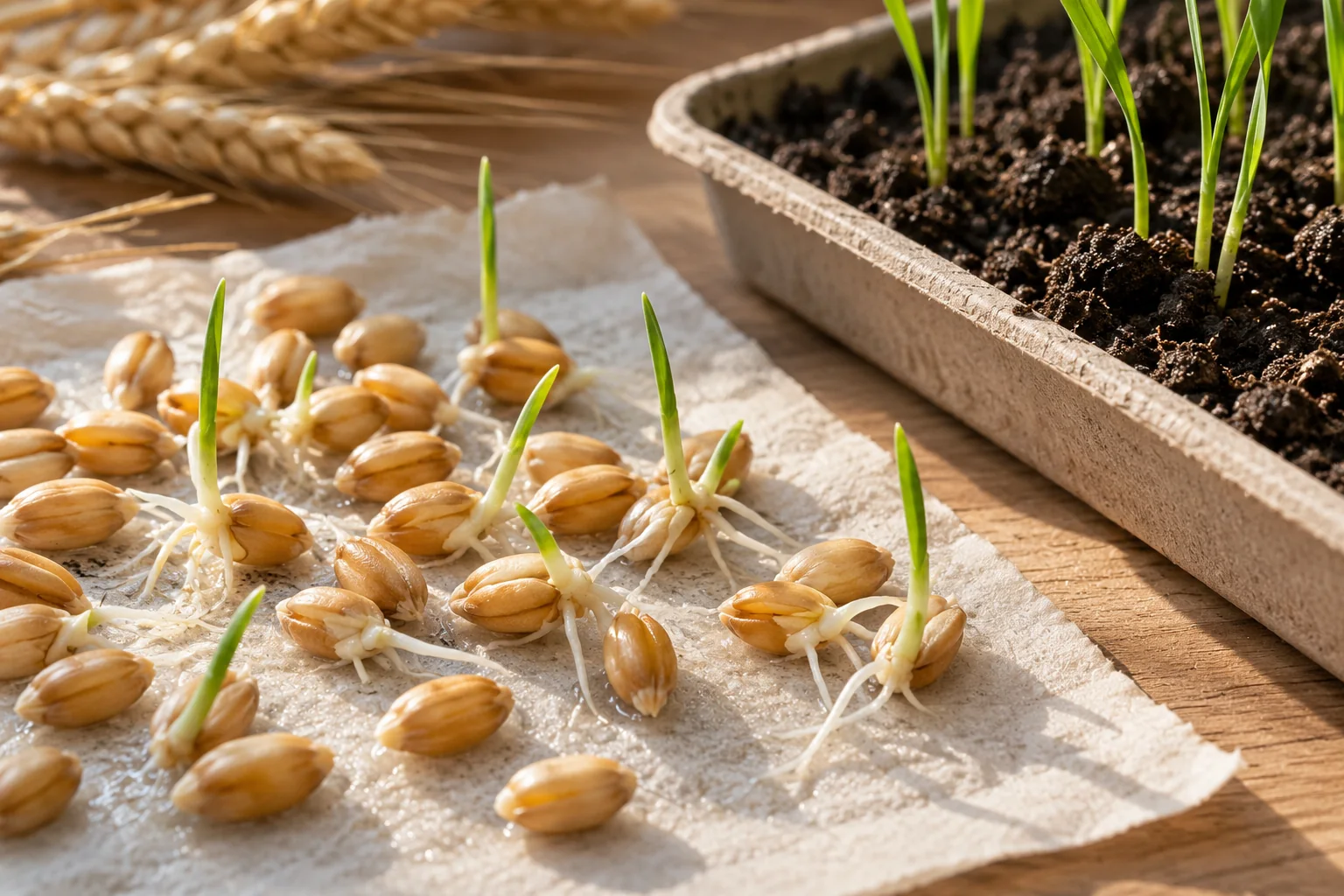
Laboratory germination indicates the proportion of seeds producing normal seedlings under controlled conditions prescribed by the method. It is a characteristic of the tested sample linked to a particular lot and test date. In the field, emerged seedlings are counted after passing through soil under actual temperature, moisture and sowing-depth conditions. The two indicators therefore answer different questions.
Before comparing percentages, establish the basis of the field calculation: all seeds sown or the number of laboratory-germinable seeds. Documents use different ways to present the result. The counting date is checked separately. Plant density after frost, treatment or other subsequent exposure describes the surviving crop; it cannot be called initial field emergence without explanation.
How to read a laboratory test report
Compare the lot number, crop, variety or hybrid, packaging labels, sampling record and sample designation in the report. Then check sampling and test dates, the method used and information about normal, abnormal and ungerminated seeds. A result for another lot or a sample of unclear origin does not become proof of the sown material's quality merely because the variety name is similar.
Between testing and sowing, seeds may have been stored, moved, treated or mechanically damaged. Assessing this period requires actual conditions rather than an assumption that quality remained unchanged. Retained seed is useful for examination if its provenance and storage are known. A later analysis of an opened bag needs a caveat: it does not always reconstruct the whole lot's condition at delivery.
Check seed numbers and the counting design
The planned sowing rate does not establish the actual number of seeds placed. Converting kilograms to numbers requires the thousand-seed weight and material purity, as well as checking drill settings and operation. A figure in millions of germinable seeds requires a separate explanation of the laboratory germination used. A denominator error can create a discrepancy even if plants were counted correctly.
For field counts, record the area or length of counting sections, row spacing, number of replicates and point locations. Retain results by individual zone, including normal and problem areas. Selecting only the sparsest rows biases the assessment. If seedlings are still emerging, state the observation date and growth stage explicitly; determine whether repeat counts are needed according to the crop and conditions.
Why the same laboratory germination produces different emergence
Seed lots with similar laboratory germination may differ in speed and uniformity of development under less favourable conditions. Vigour tests provide additional information, but the method must suit the particular crop and task. There is no universal coefficient converting any laboratory percentage into guaranteed field emergence.
Field checks consider moisture and temperature in the seed zone, air availability, depth, soil crust, fertiliser and treatment distribution, diseases and damage. Alternating good and poor rows help identify directions for machinery inspection; association with lower ground helps check soil conditions. These patterns are clues for testing explanations, not independent establishment of a cause.
How to frame the examination task
Prepare separate questions about the lot and crop: whether samples are comparable, the actual sowing rate is supported and which factors explain differences across the plot. Agree new sampling with an appropriate laboratory under the applicable method; a random handful from a convenient bag does not automatically represent the entire delivery.
The final analysis must show where measured data end and assumptions begin. High laboratory germination does not by itself rule out lot problems, and sparse emergence does not prove them. If original seed has been lost or the field resown, this limitation is considered in the conclusion while preserving available documents and count results.